Zirconia beads and alumina beads are both ceramic grinding media, and both are used every day in wet milling, dispersion and particle size reduction. The practical difference between them is not quality but fit: they differ in density, wear behaviour, contamination profile and the milling duty each one suits.
The right grinding media depends on the material being processed, the required particle size, the mill configuration, contamination requirements and overall production economics. A media choice that performs well in one circuit can be the wrong choice in another, even when the two circuits produce a similar product.
This guide compares the two media across the dimensions that matter in a purchasing decision - material composition, density and milling energy, wear and consumption, fine grinding capability, contamination, bead size, equipment compatibility, trial methodology and total process cost - and closes with a decision framework you can apply to a specific application.
Zirconia Beads vs. Alumina Beads: Quick Comparison
Zirconia beads are generally considered for demanding fine grinding and high-energy milling where density and contamination control matter, while alumina beads can be a suitable choice for conventional ceramic grinding and cost-sensitive applications. The table below summarises the comparison factors that buyers and process engineers usually review first.
| Factor |
Zirconia Beads |
Alumina Beads |
| Material type |
Zirconia-based ceramic media |
Alumina-based ceramic media |
| Density |
Higher density is generally associated with zirconia media |
Generally lower than high-density zirconia media |
| Grinding intensity |
Suitable for demanding fine grinding applications |
Suitable for a range of conventional ceramic grinding applications |
| Wear considerations |
Often selected when low wear and contamination control are important |
Can be suitable where material cost and application requirements favour alumina |
| Contamination considerations |
Suitable for applications requiring controlled media contamination |
Alumina contamination may need to be considered depending on the material |
| Typical selection factors |
Fine grinding, high-energy milling, purity requirements |
Cost-sensitive applications, conventional ceramic milling |
| Equipment compatibility |
Must match bead mill and separator design |
Must match bead mill and operating conditions |
The last row matters as much as any other. A media type that looks preferable on paper still has to be supported by the mill itself - the agitator, the chamber geometry, the separator gap and the operating window. Media selection and equipment selection are not independent decisions.
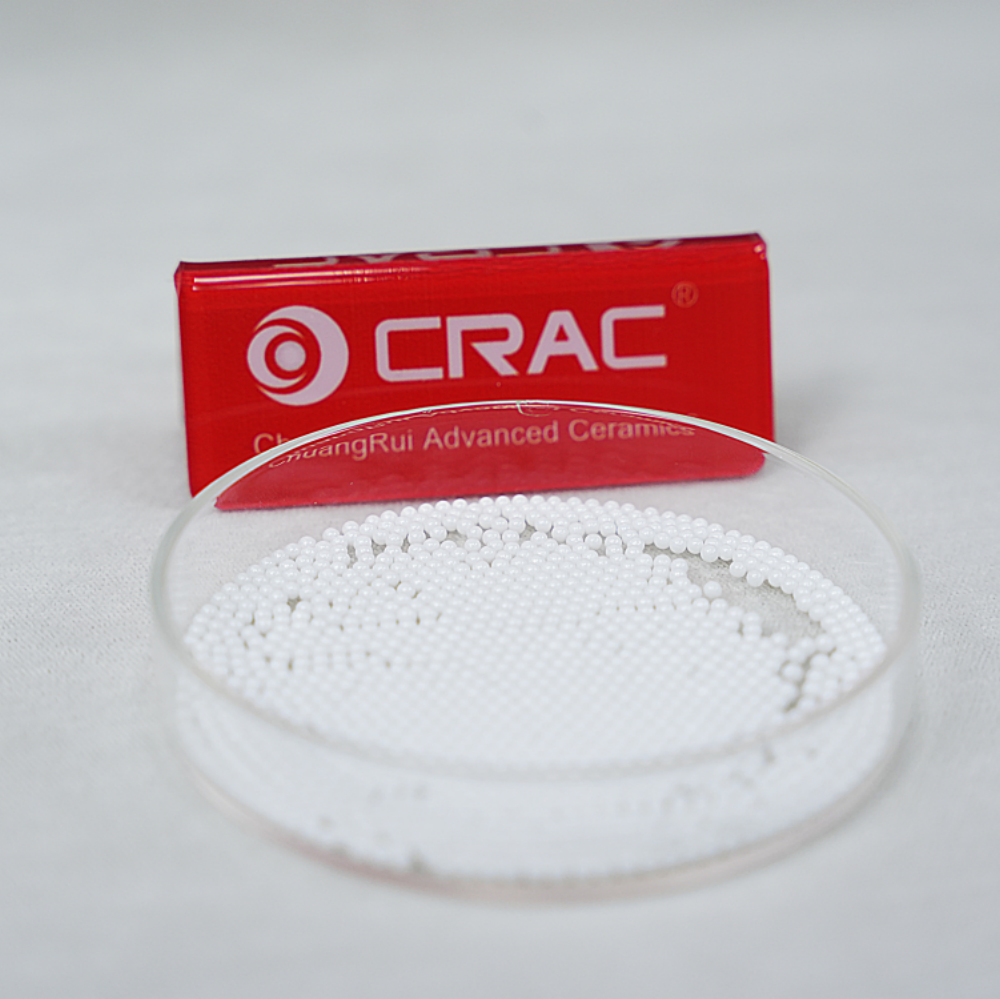
Figure 1: Zirconia grinding beads in fine size ranges, shown at production quality
What Is the Difference Between Zirconia Beads and Alumina Beads?
The difference comes down to chemistry and microstructure. Zirconia beads are built on zirconium dioxide, usually with a stabilizing oxide added to hold the material in a tough, transformation-toughened form. Alumina beads are built on aluminium oxide, a material with high hardness and excellent chemical stability but a different balance of density and toughness. That starting point propagates through every downstream property - how much energy a bead carries into the slurry, how it wears, and what it releases into the product when it does wear.
Material Composition
Zirconia-based media are produced from zirconium dioxide powder, typically stabilized with yttria so that the tetragonal phase is retained at room temperature. The stabilization strategy determines how the material behaves under repeated impact: a well-stabilized microstructure absorbs energy through a stress-induced phase transformation instead of chipping, which is why zirconia media are often selected for high-energy milling. CRAC supplies zirconia beads under the ZR95 designation, with a zirconium dioxide content of 95%, in two product families: ZR95 nano zirconia beads covering a size range from 0.05 mm to 2.0 mm, and ZR95 high-purity zirconia beads covering 0.3 mm to 5.0 mm.
Alumina-based media are produced from aluminium oxide powder, often with a small silica or magnesia addition to control grain growth during sintering. Purity and grain structure determine whether the media behave predictably in a long production run. The material is chemically stable across a wide range of slurries, which is one reason it remains common in conventional ceramic body milling and in applications where a small alumina contribution to the batch is acceptable.
One practical point for buyers: composition is not a label, it is a specification. When comparing quotations for either media type, ask for the oxide content, the stabilizer or additive used, and the impurity profile rather than relying on a generic product name. The questions worth putting to a supplier are set out in the discussion of key technical factors when selecting zirconia balls for industrial grinding.
Density and Grinding Energy
Density determines how much mass a bead carries for a given diameter, and therefore how much kinetic energy it transfers when the agitator accelerates it into the slurry. A denser bead of the same size carries more energy per contact, which can make a measurable difference when the target is a submicron or nanometre particle size distribution.
The conclusion to draw from this is not that higher density always means better grinding. Higher density can be advantageous in certain high-energy milling applications, but the final choice depends on the mill design, slurry characteristics, bead size and target particle size. A high-density bead in a mill that cannot deliver the required tip speed simply adds load without adding useful work; a high-density bead in a low-viscosity slurry may settle and channel instead of circulating. Media density has to be evaluated together with the machine that has to move it.
Wear and Media Consumption
Wear matters for two separate reasons: it changes the economics of a grinding circuit, and it introduces material into the product. Bead wear and media consumption drive top-up frequency, mill maintenance intervals and, in the worst case, unexpected shifts in particle size distribution when the media load has changed.
Wear debris is the second issue. Any media type releases some material into the slurry over time, and the significance of that release depends entirely on what the final product tolerates. Alumina-based debris and zirconia-based debris are chemically different, and for a given application one may be easier to accommodate than the other. Production consistency also depends on wear behaviour: media that wear unevenly change the energy distribution inside the mill, which can shift results between batches.
Where wear and media consumption need to be brought under control, the practical levers are the media material, the bead size relative to the target particle size, the operating conditions and the mill internals. These factors are discussed in more detail in the analysis of grinding media wear and slurry contamination in battery material milling, and in the comparison of zirconia balls against traditional grinding media.
How Does Grinding Media Density Affect Milling Performance?
Grinding media density matters because it sets the mass of each bead, and mass sets the energy available at each contact between beads and particles. Higher density means more energy per impact at a given agitator speed, which can accelerate particle breakage - but only if the mill can accelerate the bead and the slurry can carry it.
The chain of effects is straightforward once it is laid out:
- Bead mass - for a fixed bead diameter, higher density means a heavier bead that stores more kinetic energy.
- Impact and contact energy - the energy released when beads collide with each other and with particles depends on bead mass and velocity, both of which are influenced by media choice and machine settings.
- Particle breakage - whether that energy produces useful fracture of the feed material or simply heats the slurry depends on the material, the solids content and the viscosity.
- Mill operating conditions - agitator speed, chamber fill level, flow rate and cooling capacity define the window in which a dense media charge works.
- Slurry characteristics - viscosity, solids loading and rheology determine whether dense media circulate properly or settle.
- Bead size - a smaller bead of a denser material and a larger bead of a lighter material can carry comparable mass, so density and size interact.
The most important conclusion for a buyer is that density cannot be evaluated independently. It has to be read together with the mill type, the agitator and separator design, the bead size, the slurry viscosity, the hardness of the material being milled and the target particle size. CRAC reports a density of 6.0 g/cm³ or higher for its ZR95 zirconia bead range, a figure that is meaningful only when it is matched to a mill that can use it. Selection guidance for this kind of matching is covered in choosing ceramic grinding media for different milling applications and in the review of media selection for high-intensity milling processes.
Zirconia Beads vs. Alumina Beads for Fine Grinding
For fine, ultra-fine and nano grinding, zirconia beads are the media type more often considered, because high-density ceramic media can support the energy density these particle sizes require and because small bead sizes are available in that material family. Alumina media remain in use for conventional grinding duties, but the combination of fine target particle size and high energy input is where the two families diverge most clearly.
The relationship between bead size and grinding stage is a useful starting point. Larger beads are generally used for coarse grinding and pre-grinding, where the job is to break down the feed quickly. Smaller beads are generally considered for fine, ultra-fine and nano grinding, where the priority shifts to creating many contact points between media and particles. CRAC's zirconia bead range reflects that logic in its sizing: the ZR95 nano zirconia bead family runs from 0.05 mm to 2.0 mm, aimed at fine and ultra-fine duties, while the ZR95 high-purity range spans 0.3 mm to 5.0 mm for duties that need larger media and tighter purity control.
Two cautions belong with this section. First, smaller beads do not automatically mean better performance. A bead that is too small for the feed particle size cannot break it efficiently, and the mill may simply circulate the slurry without achieving the target. Second, mill and separator compatibility is not optional: the separator has to retain the media while passing the slurry, so bead size has to be selected within what the machine can physically handle. The mechanics of fine media are covered further in the notes on ultra-fine grinding with 0.05 mm zirconia balls and in the analysis of nano zirconia beads for ultra-fine grinding and dispersion.
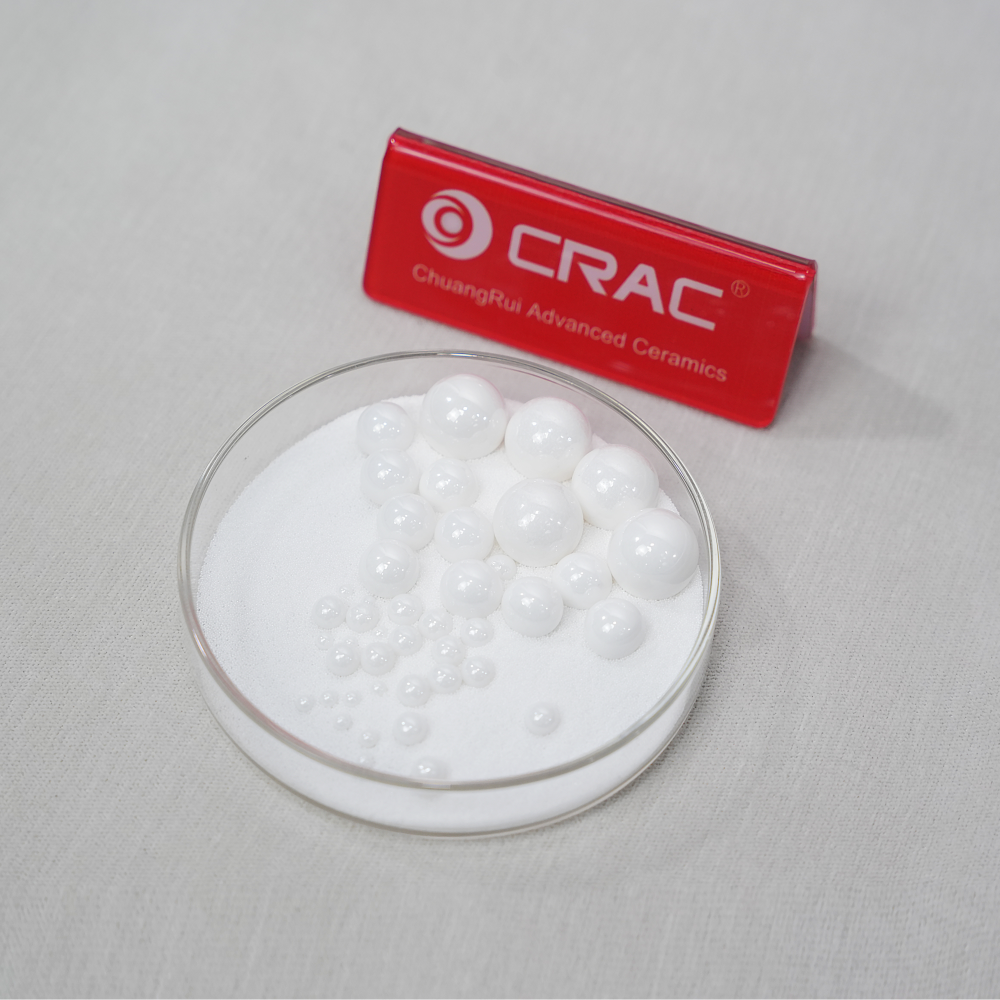
Figure 2: Zirconia beads in a range of diameters - bead size is selected per grinding stage, not per media type
How Does Grinding Media Affect Contamination?
Grinding media affect contamination whenever the media wear releases material into the slurry. That release is normal and unavoidable in any milling operation; what matters is whether the quantity and chemistry of the released material are acceptable for the final product. For many industrial products a trace contribution is irrelevant, while for battery materials, electronic materials and other sensitive formulations it can be the deciding factor in media selection.
Contamination questions usually arise in a recognisable set of industries: battery materials, electronic materials, coatings, inks, pharmaceutical materials and cosmetics, along with other formulations where a small shift in composition can affect performance or certification. In these processes, media are selected not only on grinding efficiency but on a wider set of considerations:
- Media composition - which oxides the bead is made from, and what those oxides become if they enter the product.
- Purity - the oxide content of the media, and the level of trace impurities it carries from raw material and processing.
- Wear behaviour - how the media wear under the specific duty, and whether wear is even or uneven across the charge.
- Acceptable contamination level - the limit the final product specification actually allows, which is often a specification requirement rather than an engineering judgement.
- Final product requirements - the performance or compliance criteria that determine whether the released material matters at all.
CRAC's ZR95 zirconia bead range is designated at 95% zirconium dioxide content, which is the figure a buyer should work from when assessing whether the media are appropriate for a purity-sensitive process. No manufacturer can responsibly state a contamination rate without knowing the duty, the mill and the operating conditions, so the question to ask is not "how much will these beads contaminate my product" but "what is the media composition, what is the wear behaviour under my conditions, and can my product tolerate it". Background on this is available in the guide to high-purity zirconia beads for advanced industrial grinding, the discussion of solving slurry metal contamination with zero-pollution grinding media, and the specific case of silicon nitride microbeads for high-purity semiconductor dispersion.
When Should You Consider Zirconia Beads?
Zirconia beads may be considered when a milling process combines fine or ultra-fine particle size targets with a requirement for controlled contamination and reliable wear behaviour. The decision conditions below describe situations where this media type is commonly evaluated.
- Fine or ultra-fine grinding is required, and the mill is capable of delivering the energy density that particle size reduction needs.
- Controlled contamination is important, and the final product specification limits what the media may release into the slurry.
- High-density ceramic media are appropriate for the milling system, including its agitator, chamber and separator design.
- Wear and media consumption need to be carefully controlled, either because of product consistency requirements or because of maintenance intervals.
- Processing involves sensitive materials where a change in trace composition could affect performance or compliance.
- The mill is designed to work with the selected bead size and density, so the media do not have to be forced into an unsuitable machine.
Each of these conditions is an evaluation criterion rather than a guarantee. Zirconia media may be suitable, can be considered, or may prove to be the better fit depending on the application - and the same media can be the wrong answer in a circuit where the equipment or the product specification points elsewhere. Application-specific discussions for these duties include media selection for battery material quality and yield, media selection for paint, ink and coating applications, the case for high-density zirconia beads in ink and coating dispersion, and the broader guide to zirconia beads for grinding efficiency and cost.
When Can Alumina Beads Be a Suitable Choice?
Alumina beads can be a suitable choice for conventional grinding duties where the process does not require the specific characteristics of zirconia media, and where an alumina contribution to the batch is acceptable. This is a genuine option, not a compromise - many established milling lines run successfully on alumina media and have done so for years.
- Conventional ceramic grinding applications, including body preparation and other duties with moderate particle size targets.
- Applications where alumina-based contamination is acceptable, either because the product already contains alumina or because the specification does not restrict it.
- Situations where media cost is an important consideration in the purchasing decision.
- Processes that do not require the specific characteristics of zirconia media, such as high energy density or a particular contamination profile.
- Equipment already designed around alumina media, where the mill, separator and operating conditions have been set up for the density and size range of that media family.
One principle is worth stating plainly, because it is the most common error in grinding media procurement: the lower purchase price of a grinding medium does not automatically mean lower total processing cost, but neither does a higher-priced medium automatically provide better economics. A lower-cost media that wears faster, needs more frequent top-ups or forces longer milling times may cost more per tonne of finished product. A more expensive media used in a mill that cannot exploit its density may deliver no benefit at all. The comparison has to be made on the process, not on the price list. How the two media types differ in operating characteristics is set out in the existing comparison of zirconia beads and alumina beads for milling, alongside the wider framework of ceramic grinding media selection for industrial milling.
Zirconia vs. Alumina: Which One Should You Choose?
There is no single answer that applies to every process. The decision has to be made against the requirements of a specific milling circuit, and the framework below is intended to be used that way - as a set of questions to answer, not a ranking of media types.
| Your Requirement |
Media Type to Consider |
Why |
| Fine grinding |
Zirconia may be considered |
High-density media can support demanding milling conditions |
| Ultra-fine grinding |
Zirconia may be considered |
Smaller media sizes are available for fine grinding |
| Sensitive materials |
High-purity zirconia may be considered |
Media composition and contamination control can be important |
| Conventional ceramic milling |
Alumina may be suitable |
Application requirements may not require zirconia |
| Cost-sensitive application |
Compare total cost |
Purchase price alone is not enough |
| Existing bead mill system |
Check equipment compatibility |
Bead size, separator and mill design matter |
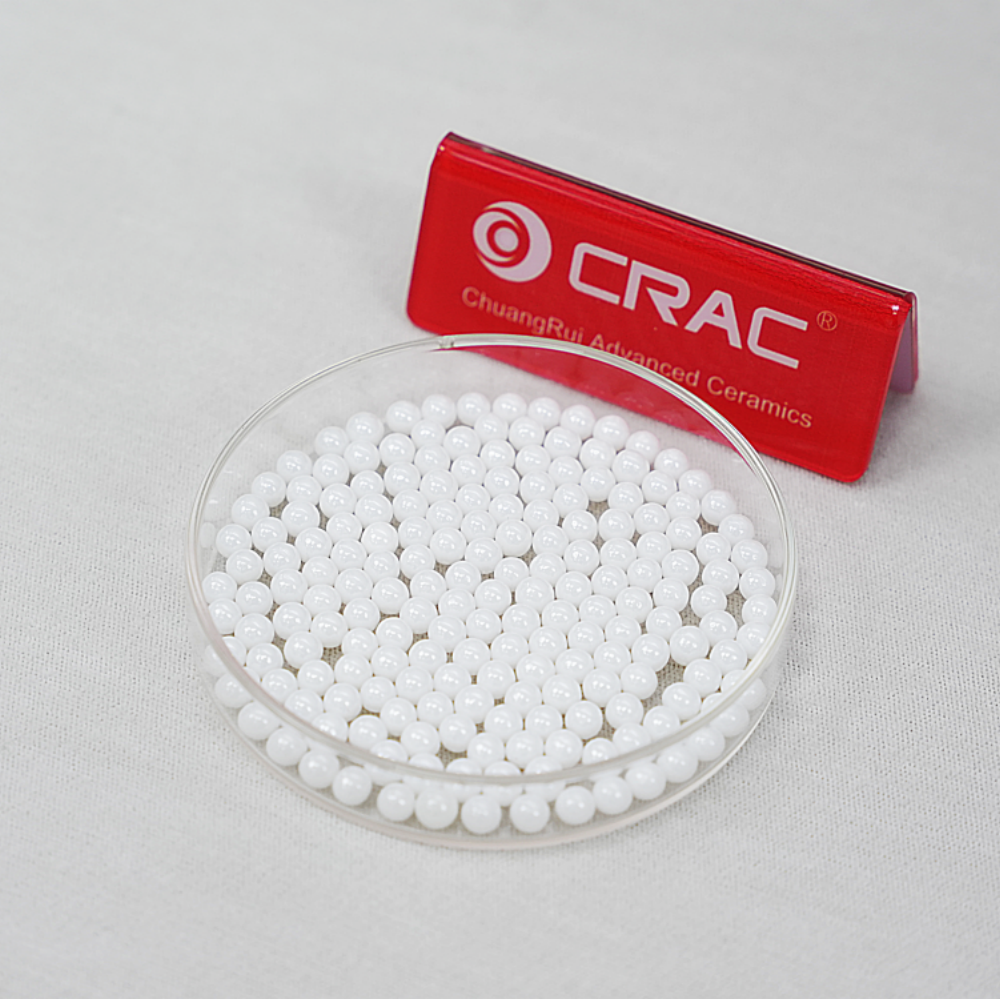
Figure 3: Zirconia beads in larger diameters, typically considered for pre-grinding and coarse milling stages
What Factors Should Buyers Check Before Ordering Grinding Media?
Before an order is placed, six factors determine whether the media will work in the intended process. Collecting this information also makes it possible to get a meaningful recommendation from a manufacturer, because media that suit one combination of variables may not suit another.
1. Target Particle Size
Establish both ends of the size reduction task. What is the starting particle size of the feed, and what is the target particle size of the finished product? Is the duty fine grinding, ultra-fine grinding or nano grinding? The answers set the lower limit on bead size and determine how much energy the circuit has to deliver.
2. Material Characteristics
Document the material being processed: its hardness, the viscosity of the slurry, the solids content, its sensitivity to contamination and its chemical compatibility with the media. Hardness and target size together indicate how much energy is required; viscosity and solids content indicate whether dense media will circulate properly; contamination sensitivity determines how much of the media composition question actually matters.
3. Mill Configuration
Record the bead mill type, the separator design and gap, the agitator geometry, the chamber design and the intended operating conditions. These are not secondary details - they define which bead sizes and densities the machine can retain and accelerate, and they are the reason two plants with the same product can need different media.
4. Bead Size
Coarse and pre-grinding generally use larger media, fine grinding generally uses smaller media, and nano grinding may require very small beads. The available size ranges should be checked against the duty: CRAC's ZR95 nano zirconia beads run from 0.05 mm to 2.0 mm and the ZR95 high-purity zirconia beads from 0.3 mm to 5.0 mm. The final size still has to be confirmed by testing on the actual equipment, because separator gaps, flow rates and slurry rheology all influence the result.
5. Purity
Ask for the zirconium dioxide or aluminium oxide content, the stabilizer or additive composition, the impurity profile and the applicable specification behind the figures. A stated purity level is only useful if it comes with the test method and the standard it was assessed against. For zirconia media, CRAC designates its range at 95% zirconium dioxide; how that information is documented is described in the material on technical support and mass production for OEM and ODM projects.
6. Wear and Consumption
Request wear resistance data and ask how it was obtained, how consumption is expected to be measured in service, which inspection standards apply, and what the size distribution looks like after use. Media that wear evenly and predictably are easier to manage than media that wear quickly but unevenly. Consumption figures quoted without a defined test condition should be treated as indicative rather than as a specification.
Why Bead Size Still Matters After Choosing Zirconia or Alumina
Choosing the material is only the first step. Once the media family is settled, bead size becomes the next decision - and in many circuits it has more influence on the final particle size distribution than the material choice itself. A zirconia bead of the wrong diameter will not deliver the result that a correctly sized zirconia bead delivers, no matter how good the material is.
The general pattern is consistent across media types: coarse grinding generally uses larger beads, fine grinding generally uses smaller beads, and ultra-fine or nano grinding may call for smaller media still. That pattern describes a starting point rather than a rule. Smaller beads are not automatically better. The mill's separator and operating conditions have to support the selected bead size, and the feed particle size has to be within the range that size can break down. The equipment side of this relationship - separator gap, flow rate and bead retention - is discussed in the notes on microcrystalline zirconia beads for nano dispersion and ultra-fine milling and in the overview of what zirconia beads are used for.
How to Compare Zirconia and Alumina Grinding Media in a Real Milling Trial
A trial is the only reliable way to decide between two media types for a specific process. The purpose is not to prove one material better in general, but to establish which one performs better under your conditions and at what cost. The sequence below keeps the comparison honest.
Step 1: Define the Target
Record the starting particle size, the target particle size, the acceptable processing time and the required throughput before any media are changed. Without these figures the trial produces numbers but no conclusion. The target should include a particle size distribution specification rather than a single average, since two media can reach the same average through different distributions.
Step 2: Keep Operating Conditions Consistent
Hold everything except the media constant: the same material, the same mill, the same slurry concentration, the same operating conditions and, as far as possible, comparable bead sizes between the two media types. Comparing a fine zirconia charge against a coarse alumina charge measures the size difference, not the material difference. If comparable bead sizes are not available for both media, note the difference and treat the result accordingly.
Step 3: Measure the Results
Compare the outcomes that matter to production: final particle size, particle size distribution, processing time, media consumption, product contamination, throughput and maintenance requirements. Media consumption should be measured by weight over a defined operating period, and contamination assessed against the product specification rather than by appearance. Running the trial long enough to see a wear trend is more informative than a short run at peak performance.
Step 4: Evaluate Total Process Cost
The comparison should not stop at the cost per kilogram of grinding media. The relevant figure combines media purchase cost, media consumption over time, processing time and energy, maintenance and downtime, and the value of any product quality difference between the two runs. A media type that costs more per kilogram but reduces milling time, cuts top-up frequency or avoids a quality problem can be the lower-cost option overall - and the opposite can be true as well. The same total-cost logic is applied to battery material milling in the analysis of the role of ceramic grinding beads in battery material processing and to the wider market in the new energy and lithium battery industry overview.
Frequently Asked Questions
Q1. Are zirconia beads better than alumina beads?
There is no absolute answer. Zirconia beads and alumina beads are different media for different duties, and which is better depends on the material being processed, the mill configuration, the target particle size, the contamination requirements and the total cost of the process. In fine and ultra-fine grinding with tight purity requirements, zirconia media are more often considered. In conventional ceramic grinding or cost-driven applications where an alumina contribution is acceptable, alumina media can be the suitable choice.
Q2. Which is better for fine grinding, zirconia or alumina?
Zirconia beads may be more suitable for high-energy, fine grinding applications, because higher-density media carry more energy per contact and small bead sizes are available in that material family. That said, the equipment and process conditions matter just as much: the mill has to be able to accelerate the media, the separator has to retain the selected bead size, and the slurry has to circulate properly. Fine grinding results depend on the whole system, not on the media alone.
Q3. Are zirconia beads more expensive than alumina beads?
Purchase prices for the two media types differ, and the difference varies with purity, size range and order quantity. The more useful comparison is total cost of ownership rather than purchase price: media consumption over the operating period, processing time and energy, maintenance and downtime, and any effect on product quality. A media type with a lower price per kilogram is not automatically the lower-cost option for a given process, and a higher-priced one is not automatically justified.
Q4. Which grinding media produces less contamination?
It depends on the media composition, the purity level, the wear behaviour under your specific conditions and how much contamination the final product can tolerate. Zirconia-based and alumina-based media release chemically different materials when they wear, and for a specific formulation one may be easier to accommodate than the other. Assess contamination against the product specification rather than in absolute terms, and ask the media supplier for composition and wear information rather than a general claim.
Q5. What zirconia bead sizes are available?
CRAC's zirconia bead range is designated ZR95 at 95% zirconium dioxide content and is supplied in two size families: ZR95 nano zirconia beads from 0.05 mm to 2.0 mm, and ZR95 high-purity zirconia beads from 0.3 mm to 5.0 mm. The full media portfolio is listed on the ceramic grinding media page.
Q6. How do I choose between zirconia bead sizes?
Work from the process rather than from the media catalogue. Start with the starting particle size and the target particle size, then check the grinding stage - coarse and pre-grinding usually call for larger beads, fine grinding for smaller ones, and ultra-fine or nano grinding for smaller media still. After that, confirm what the mill design and separator can retain and accelerate, and review the slurry properties and flow rate. The final size should be confirmed by a trial on the actual equipment.
Final Takeaway
The right grinding media is determined by the requirements of the milling process rather than by material type alone. Zirconia beads and alumina beads both have legitimate places in industrial milling, and the useful question is not which material performs better in general but which one fits a defined set of process conditions.
Seven factors carry most of the decision:
- Target particle size - fine, ultra-fine or nano duties shift the evaluation toward high-density, small-diameter media.
- Milling intensity - the energy density the process requires, and the machine's ability to deliver it.
- Media density - read together with mill design, agitation, slurry rheology and bead size, never in isolation.
- Wear and consumption - the operating cost and the production consistency implications of media wear.
- Contamination requirements - media composition, purity and wear behaviour against the product specification.
- Mill and separator compatibility - the media must be retained and accelerated by the equipment as built.
- Total processing cost - media cost, consumption, processing time, maintenance and product quality combined.
If you are comparing grinding media for a specific application, provide the material, the target particle size, the mill type, the current bead size and the processing conditions to the manufacturer for a more application-specific recommendation. Those five inputs are usually enough to narrow the choice to a media family and a size range, and to identify what should be confirmed in a trial.
Comparing Grinding Media for Your Process?
Send CRAC your material, target particle size, mill type, current bead size and operating conditions. The technical team will recommend a zirconia bead grade and size range, or confirm whether your application is better served by a different media type.