Ceramic filters are precision porous components that combine a high-strength ceramic body with carefully controlled porosity. Unlike polymer screens or metal meshes, they deliver reliable filtration while resisting abrasion, corrosion, high temperature and chemical attack. Produced by CRAC through advanced ceramic injection molding, these parts serve industries where contamination control and a long service life are critical. Learn more on the CRAC ceramic filters product page.
What Are Ceramic Filters?
A ceramic filter is a component in which a ceramic matrix—most often alumina, zirconia or zirconia-toughened alumina—forms a rigid, porous structure. The pore network is engineered rather than incidental: pore size, distribution and total open porosity are controlled during forming and sintering. This produces a filter that keeps its shape and mechanical integrity under pressure, heat and aggressive fluids, while still letting the target medium pass through predictably.
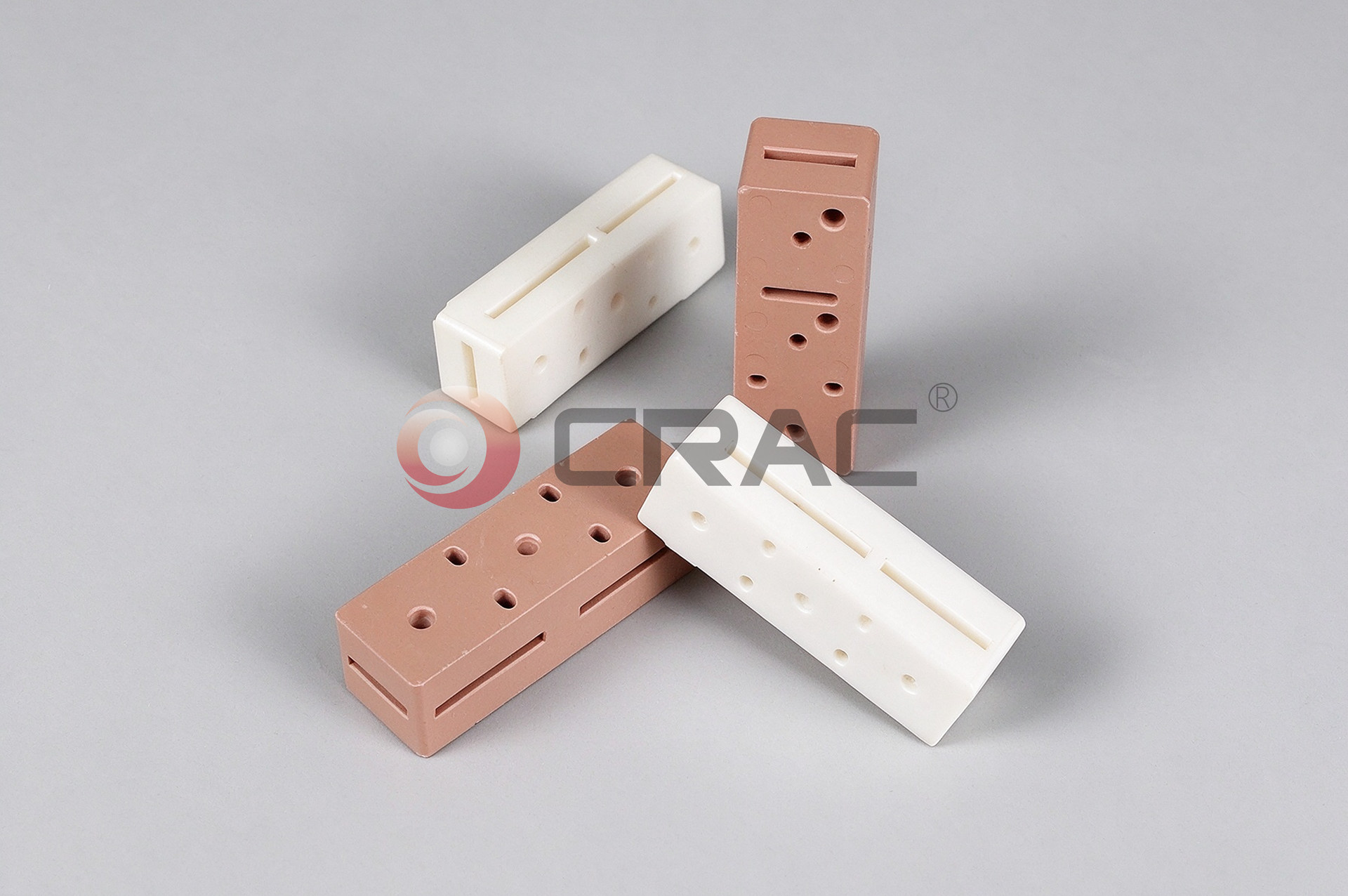
Why Ceramic Filters Outperform Metal and Polymer Alternatives
When a filtration duty involves harsh conditions, ceramics offer a combination that metal and polymer media cannot match:
- Chemical inertness – oxide ceramics do not rust or leach metal ions, making them suitable for corrosive acids, alkalis and solvents.
- Temperature resistance – they stay stable at temperatures that melt polymers and soften many metals.
- Wear resistance – ceramic surfaces resist erosion from suspended solids far better than steel screens.
- Biocompatibility – selected grades are non-toxic and non-allergenic, safe for medical and food-contact use.
- Dimensional stability – micron-level tolerances are held over a long service life.
Materials Used in CRAC Ceramic Filters
CRAC offers ceramic filters in several oxide ceramics, each with a different balance of hardness, strength and chemical resistance. The table below summarizes the typical grades.
| Characteristic |
Unit |
Alumina 99.7% |
Alumina 99% |
Alumina 96% |
Zirconia ZrO2-3Y (ivory) |
Zirconia ZrO2-3Y (black) |
ZTA 10% |
ZTA 20% |
ZTA 40% |
Zirconia Toughened Ruby |
| Density | g/cm³ | ≥3.92 | ≥3.88 | ≥3.65 | ≥6.0 | ≥6.0 | ≥4.0 | ≥4.25 | ≥4.25 | ≥4.8 |
| Color | / | ivory | ivory | White | ivory | black | White | White | pink | White |
| Bending strength | MPa | ≥600 | ≥600 | ≥300 | ≥1000 | ≥1000 | ≥700 | ≥800 | ≥800 | ≥800 |
| Vickers hardness | HV | 2000 | 1800 | 1400 | 1200 | 1200 | 2000 | 1800 | 1800 | 1500 |
| Elastic modulus | GPa | 200 | 200 | 200 | / | / | / | / | / | / |
| Thermal conductivity | W/m·K | 30 | 30 | 18 | / | / | / | / | / | / |
Choosing between them depends on the fluid and duty: alumina for broad chemical resistance, zirconia for maximum strength and toughness, and ZTA blends for a cost-effective balance. Compare options in the zirconia ceramic components selection guide and the zirconia material classification guide.
How Ceramic Filters Are Manufactured — Precision Ceramic Injection Molding
CRAC produces these parts with its self-developed Precision Ceramic Injection Molding (PCIM) process. Fine ceramic powder is mixed with a binder, injection molded into complex one-piece geometries, debound and sintered. The result is a dense, precise component with tolerances down to the micron level—something difficult to achieve with machined or pressed ceramics. Read more about precision injection molding for complex ceramic parts, the CIM manufacturing guide, and CRAC's custom OEM/ODM ceramic capabilities.
Key Performance Properties
The value of a ceramic filter comes from how its properties combine in service:
- Controlled porosity – pore size and distribution are set during processing, giving predictable flow and retention.
- Mechanical strength – bending strength ranges from roughly 300 MPa (alumina 96%) up to 1000 MPa (zirconia grades), per the table above.
- Thermal and chemical stability – stable under heat and aggressive media where polymers fail.
- Biocompatibility – selected grades are safe for medical and food-contact duty.
- Tight tolerances – micron-level precision is maintained across production batches.
Where Ceramic Filters Are Used
Ceramic filters suit any duty that demands clean, corrosion-resistant filtration:
- Chemical processing – filtration of aggressive process streams that attack metal screens.
- Pharmaceutical and medical – biocompatible, contamination-free filtration; see medical ceramic micro-components and micron-tolerance medical ceramic parts.
- Food and beverage – inert, cleanable filtration media.
- Water and wastewater – corrosion-resistant screens for long duty cycles.
- Semiconductor and electronics – ultra-clean fluid paths for sensitive processes.
- Laboratory and analysis – precise, stable filtration media.
How to Select the Right Ceramic Filter
A practical selection path:
- Identify the fluid chemistry – pick the material (alumina, zirconia or ZTA) that resists your medium.
- Define pore size and flow – specify the porosity and retention you need.
- Confirm temperature and pressure – verify the chosen grade against duty limits.
- Define geometry and tolerance – use PCIM for complex one-piece shapes.
- Choose a partner with process control – work with a manufacturer that holds batch-to-batch consistency and verified tolerances.
Quality and Customization
CRAC controls powder, forming, sintering and inspection for every batch, holding micron tolerances and consistent porosity. Parts can be customized in shape, material and color to match the exact duty of your filtration system.
Frequently Asked Questions
Can ceramic filters be used with strong acids?
Yes—oxide ceramics such as alumina and zirconia resist a wide range of acids and alkalis. Always confirm the specific medium against the grade data.
Are ceramic filters biocompatible?
Selected grades are non-toxic and non-allergenic and are used in medical and food-contact contexts.
What shapes are possible?
PCIM enables complex one-piece geometries with micron-level tolerance.
Can pore size be customized?
Porosity is controlled during forming and sintering; specify your requirement when ordering.
Ready to specify ceramic filters for your application?